
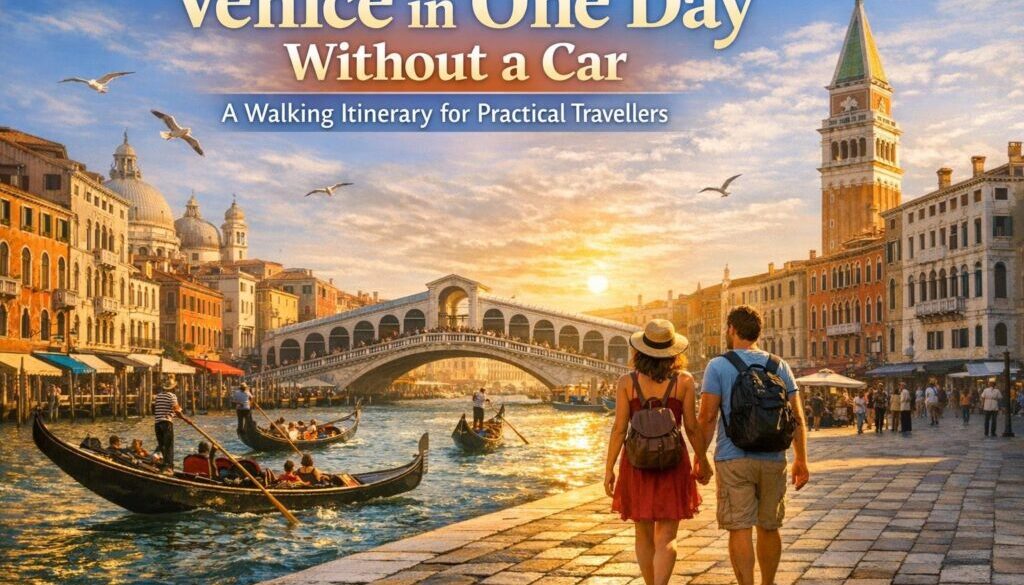
Venice in one day without a car is not only possible, it is the most natural way to experience the city. The historic centre is car-free, so the real question is not whether you can drive around Venice, but how to walk it well, when to use the vaporetto, and how to avoid wasting precious time getting turned around.
For a short visit, the best approach is simple: stay focused, start early, and treat Venice as a city of connected walking segments rather than a place to tick off in a rush. A well-planned day can comfortably include the major atmosphere and the classic landmarks, as long as you accept that Venice rewards pace and planning more than speed.
null
Quick Answer
Yes, Venice in one day without a car is realistic if you keep your route compact, walk between nearby sights, and use vaporetto only when it genuinely saves time or energy. Venice is designed for pedestrians, but the network of lanes, bridges, and dead ends means a little structure goes a long way.
Can You Do Venice in One Day Without a Car?
Yes. In fact, Venice in one day without a car is how most independent travellers experience the historic centre. Cars do not belong in the lagoon city’s core, and movement is primarily on foot or by water transport. The challenge is not access, but efficiency.
The city’s pedestrian network is famously intricate, so walking times are often longer than they look on a map. That is why a one-day visit works best when you choose a compact route and leave room for the occasional wrong turn. Official visitor information from Venezia Unica and the City of Venice both reflect how central walking and water transport are to getting around.
Why walking works so well here
Venice is a city made for discovery on foot. You move through narrow lanes, across bridges, and into small squares that reveal themselves gradually rather than all at once. That makes a walking-based day rewarding even when you only have a limited window.
For travellers who prefer a bit of structure without joining a group, this is exactly the kind of place where self-guided walking tours can add confidence. You still move at your own pace, but you also get context as you go.
Why walking alone is not always enough
Walking is the right default, but it is not always the fastest option. If you are crossing a longer stretch of the Grand Canal or want to protect energy for the main sights, the vaporetto can be a sensible time-saver. On a one-day itinerary, that matters.
For route planning, it is also worth viewing the location on Google Maps before you go. Maps are useful in Venice, even if the city sometimes makes them work harder than usual.
Best Way to Structure a One-Day Venice Itinerary
If you want Venice in one day without a car to feel smooth rather than frantic, build your day around three ideas: start early, keep the route compact, and use the vaporetto strategically rather than habitually.
Start early to beat the flow
An early start gives you the best chance of experiencing Venice before the busiest daytime flow builds. It also gives you more breathing room if you arrive by train or transfer from the airport and need a little time to orient yourself.
Focus on a compact walking loop
For a short visit, it is better to see a smaller area well than to spend the entire day in transit. A practical walking day typically centres on the route between the arrival point, the San Marco area, the Rialto zone, and the Canal-side viewpoints that link them.
Use vaporetto only where it helps
Venice’s water buses are not a cheat code; they are part of the city’s transport system. On a limited schedule, they can be useful for crossing wider gaps, reducing fatigue, or giving your feet a break when the walking is already full. Official transport information is available through ACTV and AVM.
Ready to Explore Venice?
Discover Venice at your own pace with a Walkables self-guided audio walking tour.
A Realistic Walking-Based Venice Route
This is not a race through every famous address in the city. It is a practical outline for seeing the heart of Venice in a single day without car travel, while keeping the experience enjoyable.
1. Arrive and orient yourself
Whether you arrive at Venezia Santa Lucia rail station or transfer in from elsewhere, spend the first part of the day getting your bearings. Venice rewards the traveller who takes a moment to understand where they are before setting off.
If you are arriving by air, the official Venice Marco Polo Airport site is the best place to confirm transfer options and current airport information. For rail arrivals, Trenitalia and Italo are the most relevant official sources to check ahead of time.
2. Walk through the San Marco area
The San Marco area is the classic introduction to Venice, and it deserves time rather than speed. This is where the city’s historic public face is most concentrated, and it is usually the part of a one-day itinerary that first-time visitors want to prioritise.
Keep expectations realistic. The goal is not to see everything in detail, but to let the atmosphere of the area set the tone for the day. If queues, crowds, or timing make a full visit impractical, it is still worth moving through the area on foot and absorbing the setting.
3. Continue toward Rialto and the Grand Canal
Rialto is one of the most practical and rewarding places to include in Venice in one day without a car because it connects easily to the city’s walking rhythm. The surrounding streets, canal views, and bridge crossings help give the day shape.
This is also a sensible point to consider a vaporetto ride if your feet are tiring. A short water-bus stretch can preserve energy without derailing the walking experience.
4. Leave room for one scenic detour
If time allows, add only one detour rather than several. Venice is full of tempting side streets, but a one-day itinerary works best when you protect the main route and treat extra wandering as a bonus, not a requirement.
The city’s official tourism and visitor sites note the importance of planning around the pedestrian network and the water-transport system, which is exactly why a disciplined route matters on a short visit.
What to Know Before You Go
Practical preparation makes a big difference in a city like Venice. The walking is enjoyable, but only if you are not constantly stopping to reorient yourself, check rules, or figure out where you are headed next.
Check day-visitor access rules
Venice has introduced day-visitor access measures in recent years, and the rules can change. The official access contribution portal at cda.ve.it is the place to check whether your travel date is affected, whether an exemption applies, and whether booking is required.
Because these rules can change, it is wise not to rely on old blog posts or casual forum advice. Verify the current situation close to departure.
Expect a complex pedestrian network
Venice is not difficult in the sense of being unsafe or inaccessible, but it is easy to misread if you assume the shortest line on a map is the easiest route on foot. Bridges, narrow lanes, and occasional dead ends mean that walking time often stretches longer than expected.
That is why a phone map, a paper backup, or an audio-guided walk can be so useful. For independent travellers, the best solution is often to combine flexibility with just enough structure.
Carry a phone setup that works offline
For Australian travellers, Venice is a strong case for having mobile data plus offline maps. A travel eSIM is often convenient if you want to use navigation, check transport information, and stay connected without swapping physical SIM cards. If you are comparing options for overseas spending and data use, you may also want to learn more about Wise for managing travel money, especially if you are planning more of Europe after Italy.
If you prefer to compare tours and activities around the city rather than self-structured sightseeing, you can also browse tours and activities for extra ideas. Walkables may receive a commission if you sign up or purchase through this link.
💡 Walkables Travel Tip
In Venice, the best insurance against getting lost is not rushing. Pause, confirm the next bridge or canal crossing, and keep your route simple. A slower walk often gets you there faster than repeated backtracking.
For Australian Travellers
If you are planning Venice in one day without a car from Australia, a few practical checks belong at the top of your list. Italy entry conditions, Schengen rules, phone connectivity, and spending options are all worth sorting before you travel.
Check entry requirements before departure
Australian passport holders should confirm current short-stay entry rules before travelling to Italy and the wider Schengen area. The most reliable starting point is Smartraveller’s Italy advice, which is updated for Australian travellers.
If you are also following broader European border policy changes, the European Commission’s Schengen information is a useful reference point. Requirements can change, so avoid relying on outdated assumptions.
Use data wisely, not constantly
In Venice, a reliable data connection helps with maps, tickets, and live adjustments, but you do not need to stare at your phone every few minutes. The sweet spot is to check your route, set the next stop, and then put the phone away while you walk.
Keep payment habits simple
Cashless payments are common in tourist areas, but carrying a small amount of cash is still sensible for minor expenses. If you are using an international card or travel money service, make sure it is set up before you leave Australia so you are not dealing with account issues mid-itinerary.
Want to Discover More on Foot?
Explore Walkables self-guided audio experiences and discover destinations at your own pace.
When a Self-Guided Audio Tour Makes Sense
Venice in one day without a car is exactly the kind of trip where a self-guided audio walk can work beautifully. You get the freedom to move on your own timetable, but you also gain the sort of context that makes historic streets, bridges, and landmarks feel more connected.
For time-poor travellers, that balance matters. You are not committing to a rigid group schedule, yet you are not left to improvise every turn on your own. That is especially valuable in a city where navigation can be as memorable as the sights themselves.
A self-guided format also suits travellers who want to avoid the pressure of trying to see everything. In Venice, less can genuinely be more. A focused walking day, with context as you go, often leaves a stronger impression than a frantic checklist.
Final Tips for Making the Most of One Day
To make Venice in one day without a car feel satisfying, not exhausting, keep your priorities clear. Choose a compact route, use vaporetto only when it saves time or energy, and accept that the city’s charm often comes from the spaces between major landmarks.
Plan ahead for access rules, bring the right connectivity setup, and leave a little room for the city to surprise you. Venice is one of those places where the experience of moving through it is part of the point. If you walk it well, one day can feel surprisingly full.
For current transport details, official visitor rules, and route support, the most useful references remain Venezia Unica, the access contribution portal, and Google Maps as a live navigation aid.
In the end, Venice in one day without a car is less about doing everything and more about doing the right things in the right order. Walk with purpose, pause often enough to look around, and let the city do the rest.
Affiliate disclosure: Walkables may receive a commission if you purchase or sign up through some external links in this article.