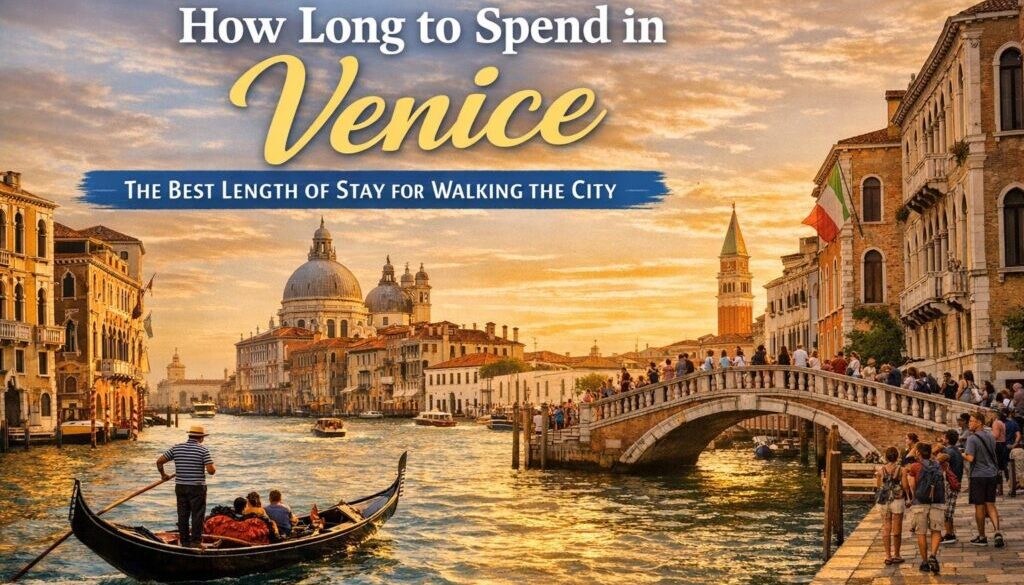
Venice looks compact on a map, but it rewards slower travel than most first-time visitors expect. If you are trying to work out how long to spend in Venice, the practical answer is this: one day gives you the highlights, two days gives you a solid first visit, and three days is the sweet spot for most travellers who want to experience the city properly on foot.
That is because Venice is not a place where you simply move from one attraction to the next in a straight line. Walking is the main way to get around the historic centre, and routes are often indirect thanks to canals, bridges, and the city’s pedestrian layout. For official city information, the Comune di Venezia and the Venice official tourism portal are useful starting points, especially if you want current visitor information before you travel.
Quick Answer
For most travellers, 2 to 3 days is the best answer to how long to spend in Venice. One day is enough for a fast overview, but it leaves little room for wandering, neighbourhoods, meals, or vaporetto rides.
How Long to Spend in Venice?
The short answer depends on what you want from the city. If your goal is simply to see the headline sights, you can do Venice in a day. If your goal is to feel the place, move through it at a human pace, and enjoy the walking experience that makes Venice distinctive, you need longer.
Venice is a pedestrian city in the historic centre, so walking is not just part of the experience; it is the experience. That matters when you plan how long to spend in Venice, because time disappears faster than expected once you factor in bridges, route changes, photo stops, and the occasional wrong turn that turns out to be part of the fun.
Why Venice takes longer than it looks on a map
Maps can be misleading here. A short distance can take longer than you expect because you may need to cross bridges, follow indirect pedestrian routes, or detour around canals. Even when you are close to a landmark, the last stretch often takes more time than it would in a car-based city.
That is also why a self-guided walk can be so useful in Venice. With self-guided walking tours, you can move at your own pace, linger when a side street catches your eye, and still have a clear sense of direction without feeling tied to a group schedule.
Is Venice Walkable?
Yes, Venice is highly walkable in the sense that you can reach most of the historic centre on foot. But it is not fast. The city is built for walking, and that is part of its appeal, yet the same layout also means your daily sightseeing radius is smaller than it first appears.
For travellers who like to discover a place street by street, that is a strength. Venice rewards curiosity. You notice quieter canals, small squares, and moments between the major landmarks. That is one reason how long to spend in Venice is such an important question: the city gives back more when you stop trying to rush through it.
Why walking is the best way to explore
Walking lets you experience Venice as a lived-in city rather than a sequence of famous sights. You understand how the neighbourhoods connect, how people actually move, and how the atmosphere shifts once you step away from the busiest corridors.
For many travellers, that is the difference between a checklist visit and a memorable one. If you like exploring independently, this is exactly the sort of destination where a self-guided approach works well. Walkables’ self-guided walking tours are designed for that style of travel, and Walkables may receive a commission if you use the link and make a purchase.
When vaporetto helps
Walking does most of the work, but vaporetto services are useful for longer hops and for getting to the islands. If you want to visit Murano, Burano, or Torcello, allow extra time rather than squeezing them into a packed schedule. The official transport information from ACTV / AVM Venezia is the best place to check current public transport details before you go.
Ready to Explore Venice?
Discover Venice at your own pace with a Walkables self-guided audio walking tour.
How Many Days Do You Need in Venice?
1 day in Venice: the highlights only
One day is enough if Venice is a short stop on a bigger trip. You can focus on the most famous areas, get a feel for the city’s atmosphere, and enjoy a walk or two between key sights. But it is a compressed version of Venice, not a full visit.
If you only have one day, expect to prioritise. There will be little time for getting pleasantly lost, long lunches, museum visits, or a slower neighbourhood walk. In practical terms, the answer to how long to spend in Venice if you are only transiting through is: one day works, but only just.
2 days in Venice: a strong first visit
Two days is the minimum I would recommend for most independent travellers. It gives you enough time to see the main sights, walk beyond the busiest corridors, and experience Venice in the evening when the day-trippers have thinned out.
This is also the point where Venice starts to feel more like a place and less like a set piece. You can slow down, take a vaporetto ride if needed, and build in proper meal breaks. For travellers deciding how long to spend in Venice on a first trip, two nights is a sensible baseline.
3 days in Venice: the sweet spot
Three days is the best balance for most visitors. It gives you enough time to see the essentials without rushing, and enough breathing room to let the city unfold on foot. You can walk different neighbourhoods, return to a favourite area at a calmer hour, and still have space for an island visit or a museum visit if that is of interest.
If you are asking how long to spend in Venice because you want the city to feel memorable rather than rushed, three days is the safest answer. It suits travellers who value walking, atmosphere, and independent discovery.
4+ days in Venice: for islands and slow travel
Four days or more is ideal if you want a slower rhythm, additional island time, or a more generous mix of walks and indoor visits. It is also the right choice if you dislike packed itineraries or if you prefer to revisit areas at different times of day.
Longer stays make sense when Venice is one stop in a broader Italy itinerary and you want to balance sightseeing with unhurried meals and downtime. For a city that is often treated as a quick stopover, extra time can change the whole experience.
What Changes the Ideal Length of Stay?
There is no single correct answer to how long to spend in Venice because the right stay depends on how you like to travel. A fast-paced sightseer will manage more in less time than a traveller who likes to pause, photograph, and wander.
Your travel style
If you like to move quickly and tick off major landmarks, you can compress Venice into a shorter visit. If you prefer slow mornings, spontaneous detours, and long lunches, you will need more than a single night.
Where you stay in the city
Accommodation location matters in Venice. Staying close to a major arrival point or a central area can save time, especially when you have luggage. A well-located hotel can make a short stay feel smoother, while a more remote one can add extra walking and transfer time.
Peak season vs shoulder season
Crowds can affect how much you see in a day, especially around the busiest sights and routes. In busier periods, simple walks can take longer, and it becomes harder to move at an easy pace. That makes a longer stay even more valuable.
Whether you want island day trips
If Murano, Burano, or Torcello are on your list, do not count them as an afterthought. They deserve their own time. Even if you only take one island trip, it can quickly turn a two-day stay into a three-day stay.
💡 Walkables Travel Tip
In Venice, plan your day by areas rather than by individual sights. You will spend less time zig-zagging across canals and more time actually enjoying the city on foot.
Practical Planning Tips for Australian Travellers
For Australians, Venice is usually part of a longer Europe trip, so practical planning matters. If you are deciding how long to spend in Venice, factor in jet lag, arrival time, and whether you want your first day to be a light walking day or a fuller sightseeing day.
Passport, Schengen, and ETIAS checks
Australians visiting Italy should check current entry requirements before departure, including passport validity and any future changes to European entry systems. The best official reference is Smartraveller’s Italy advice, alongside the EU’s Travel Europe information. Entry rules can change, so verify the latest details before you book or travel.
Safety and pickpocket awareness
Smartraveller advises Australians to exercise normal safety precautions in Italy and stay alert in crowded tourist areas. In Venice, that is especially relevant around popular walking routes and busy arrival points, where it is wise to keep valuables secure and avoid fuss when checking maps or tickets.
Connectivity for maps, translations, and bookings
Because Venice relies so heavily on walking, live maps and mobile data are genuinely useful. They help with route-finding, vaporetto checks, restaurant bookings, and translation. If you are planning to use an eSIM, make sure your device supports it and is carrier-unlocked. Apple’s official eSIM support page is a good place to confirm device compatibility.
How a Self-Guided Walk Can Improve a Venice Trip
Venice is one of the best cities for a self-guided approach because it rewards flexibility. You may not want to follow a rigid timetable in a place where getting slightly lost can lead to your best discoveries. A well-designed audio walk can give structure without taking away freedom.
That is where a self-guided format fits naturally. If you are choosing how long to spend in Venice and want to make the most of two or three days, a flexible walking experience can help you stay oriented while still leaving room for spontaneous detours. You can browse self-guided walking tours when you want your route to feel more intentional without becoming overplanned.
Why audio guidance suits Venice
Audio works well in a city like Venice because it supports the rhythm of walking. You can listen, pause, look around, cross a bridge, stop for coffee, or simply take in the view before pressing play again. That is a better fit for Venice than a rushed point-to-point approach.
How it supports flexible sightseeing
With a self-guided experience, you are free to shorten or extend your day depending on energy, weather, and crowds. That flexibility becomes especially valuable when you are still deciding how long to spend in Venice and want each day to feel rewarding rather than packed.
Want to Discover More on Foot?
Explore Walkables self-guided audio experiences and discover destinations at your own pace.
Final Verdict: How Long Should You Stay?
If you want the clearest answer to how long to spend in Venice, here it is: stay three days if you can, two days if you need to keep it tighter, and one day only if Venice is a brief stop on a bigger itinerary. The city is compact, but it is not quick. Its bridges, canals, and pedestrian routes mean walking takes longer than expected, and that is part of what makes the place memorable.
For most travellers, the best Venice trip is not the fastest one. It is the one that leaves enough time to walk, pause, and notice the city properly. If you give Venice that space, it tends to reward you for it.
For sightseeing ideas beyond this planning guide, you can also browse tours and activities and compare what might fit into your itinerary. Walkables may receive a commission if you use the Viator link and make a purchase.
And if you are still deciding how to shape your trip, open Google Maps and trace the walking distances between the areas you want to visit. In Venice, the map is often less important than the route between the points.
In the end, the best answer to how long to spend in Venice is the amount of time that lets you walk it well.