For a first visit, the best things to see in Venice on foot are the places that make the city feel unmistakably Venetian: the grand monuments around St. Mark’s, the Rialto crossing, the canals between them, and the quieter streets that connect it all. Venice rewards slow movement. The city is compact enough to explore without rushing, but intricate enough that walking is the only way to really understand how it hangs together.
If you want a short, satisfying way to see Venice, start with the icons, then leave space for getting pleasantly lost. That balance is what makes a walking visit here memorable rather than exhausting.
Quick Answer
The best things to see in Venice on foot are St. Mark’s Square, St. Mark’s Basilica, Doge’s Palace, the Rialto Bridge and market area, Grand Canal viewpoints, quieter side canals, and the atmospheric streets linking them all.
Why Venice is Best Explored on Foot
Venice is a city built for walking. Its canals, bridges, and narrow lanes mean that even a simple route becomes part of the experience. You are not just moving between sights; you are moving through a place where the journey is the attraction.
Walking also gives you the details you would miss from a vaporetto or a water taxi: the sudden opening of a campo, laundry strung above a quiet alley, reflections under a small bridge, or a side canal that feels worlds away from the busiest squares. That is why the best things to see in Venice on foot are not limited to the famous monuments. The spaces between them matter just as much.
For travellers who prefer a flexible pace, this is exactly where self-guided walking tours can be especially useful. They give you structure without removing the freedom to pause, detour, or linger when a corner of the city catches your attention.
7 Best Things to See in Venice on Foot
1. St. Mark’s Square
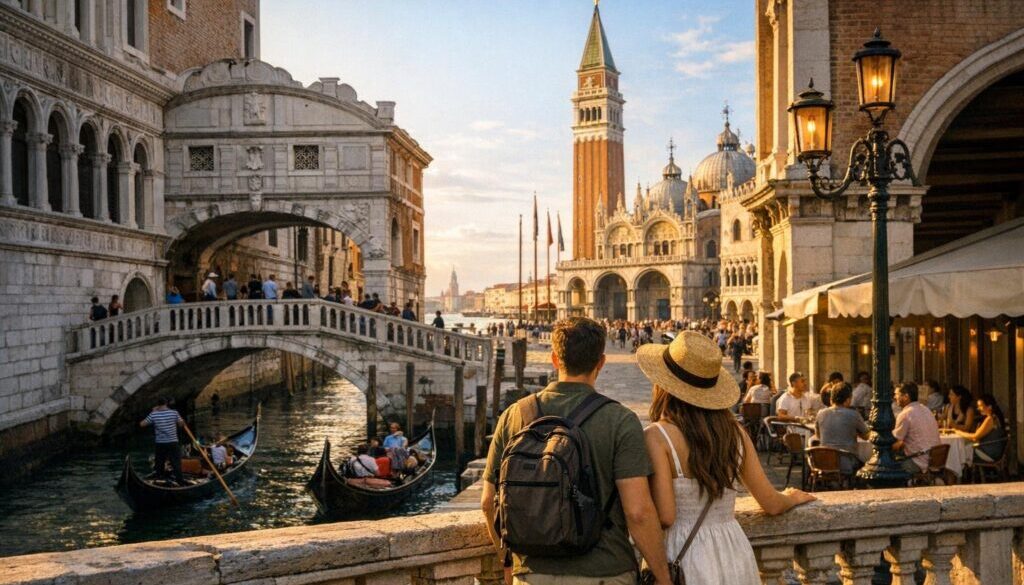
Start with St. Mark’s Square, the public stage at the heart of Venice. It is the city’s most famous open space and one of the most important places to orient yourself on arrival. Even if you have seen it in photographs, the scale feels different when you stand in it and look around.
This is the place to take in the architecture, watch the flow of people, and understand how Venice presents itself to the world. It is also the natural starting point for a walking route through the city, because several of the major sights cluster here.
Before you go, it helps to view the location on Google Maps so you can see how St. Mark’s connects to the Rialto area and the surrounding streets.
2. St. Mark’s Basilica
Just beside the square, St. Mark’s Basilica is one of the most distinctive religious buildings in Venice. Its facade alone is worth time on foot, especially when you can slow down and study the details instead of hurrying past with a group.
The basilica matters not only because it is famous, but because it helps explain the city’s long history of exchange, wealth, and influence. Even from the outside, it is one of the essential stops on any walking route through central Venice.
If you want to add more context to your visit, browse tours and activities for ideas around Venice. Walkables may receive a commission if you make a purchase through this affiliate link.
3. Doge’s Palace
Next door to the basilica, Doge’s Palace is one of the most compelling buildings to see on foot because it anchors the political history of Venice in a single place. Even if you do not go inside, the exterior gives you a strong sense of the city’s former power and refinement.
What makes this stop especially worthwhile in a walking guide is its position. You are not isolating a single monument; you are seeing how the palace relates to the square, the waterfront, and the wider ceremonial centre of Venice.
Ready to Explore Venice?
Discover Venice at your own pace with a Walkables self-guided audio walking tour.
4. The Rialto Bridge and Market Area
The Rialto Bridge is one of the most recognisable crossings in Venice, but the area around it is just as rewarding as the bridge itself. Walking here gives you a sense of the city’s everyday rhythm: the crowds, the movement over the canal, and the historic commercial heart of Venice.
If your time is limited, this is one of the best things to see in Venice on foot because it combines a landmark view with a real sense of place. The surrounding streets are busy, but they also reward patience. Step a little away from the main crossing and the atmosphere changes quickly.
5. Grand Canal Viewpoints
You do not need a boat ride to appreciate the Grand Canal. Some of the most satisfying moments on a Venice walking itinerary come from stopping at bridges, bends, and open stretches where the water suddenly broadens in front of you.
The Grand Canal is Venice’s main artery, and seeing it from multiple angles helps you understand the city’s layout. Walking allows you to keep finding new viewpoints rather than treating the canal as a single photo stop.
6. Quiet Canals and Side Streets
Once you have seen the main landmarks, leave time for the quieter parts of Venice. The side streets and smaller canals are where the city becomes more intimate. These are often the places where travellers feel Venice most strongly, because the pace drops and the crowds thin.
There is no need to force a perfect route here. The pleasure is in the wandering itself: turning a corner, crossing a small bridge, and finding a canal that feels calm even in a busy city. For many visitors, this is where the best things to see in Venice on foot become the things they did not plan to see at all.
7. A Scenic Walk Linking the Highlights
If you want one simple way to make the day work, connect the major highlights into a loose walking loop: St. Mark’s Square, the basilica, Doge’s Palace, the waterfront, the Rialto area, and then the streets in between. The exact route matters less than the rhythm of it.
Venice is not a city to conquer. It is a city to pass through slowly. A good walking day here should feel balanced: one or two major sights, a few viewpoints, and enough unstructured time to notice the city’s smaller details.
How to Make the Most of a Venice Walking Route
Planning is useful in Venice, but overplanning can work against you. The city’s charm often comes from the moments between destinations, so the best walking route is one that gives you enough direction to stay relaxed without making every turn feel scripted.
Best times to walk
Early morning and later in the day are usually the most comfortable times to walk if you want a calmer atmosphere. The busiest areas around St. Mark’s and Rialto tend to feel more intense in the middle of the day, so moving earlier or later can improve the experience.
What to expect on the streets
Expect bridges, turns, and occasional dead ends. Venice is navigable on foot, but it is not a grid. That is part of its character. A map is useful, but so is a willingness to adapt if a route does not unfold exactly as planned.
💡 Walkables Travel Tip
In Venice, the best walking day usually comes from combining the obvious landmarks with a few unplanned detours. Build in extra time for crossing bridges, pausing at canals, and retracing your steps if needed.
For route planning and confidence on the ground, it helps to keep cruise port guides in mind if Venice is part of a wider trip. They are useful when you want to make the most of limited time in a port city, even if you are travelling independently.
How to balance famous sights with slower exploration
If you only chase the headline attractions, Venice can feel crowded and rushed. If you only wander, you may miss the landmarks that give the city its identity. The sweet spot is somewhere in between: structure your day around the essentials, then leave room for the spaces that connect them.
That is the real appeal of the best things to see in Venice on foot. You are not choosing between sightseeing and atmosphere. In Venice, walking gives you both.
Want to Discover More on Foot?
Explore Walkables self-guided audio experiences and discover destinations at your own pace.
Is a Self-Guided Audio Walk a Good Fit in Venice?
Yes, especially if you want context without committing to a fixed group schedule. A self-guided audio walk can help you understand what you are seeing while still leaving you free to linger at a bridge, stop for a coffee, or change direction when a quieter street looks more appealing.
Venice is well suited to this style of travel because the city rewards curiosity. Audio adds background and storytelling, while the walking itself keeps the experience personal and flexible. For independent travellers, that combination is often the most satisfying way to explore.
If you want to deepen the day further, it can also be useful to explore local tours and experiences before you go. That can help you compare what to do on your own versus what to add with a specialist experience.
Final Thoughts: The Best Venice Experience Happens at Street Level
The best things to see in Venice on foot are not just the famous sights, but the way they connect through bridges, canals, and narrow lanes. St. Mark’s, the basilica, Doge’s Palace, Rialto, and the Grand Canal are essential. But the quieter spaces between them are what turn a checklist into a memorable day.
If you are planning your first visit, keep the route simple, stay flexible, and leave room to wander. Venice is at its best when you let the city unfold at walking pace.
For travellers who want a more guided but still independent approach, Walkables self-guided audio experiences offer a premium way to explore slowly and confidently, scene by scene.