Rialto Market is one of the easiest places in Venice to understand the city through everyday life rather than monuments alone. Set near the Rialto Bridge, it is where travellers come for the morning rhythm of fresh produce, fish and local shopping, and it works best when you arrive early and explore on foot. If you are planning a visit, the short version is simple: go in the morning, expect a busy but atmospheric market area, and treat the surrounding lanes and bridges as part of the experience.
null
Quick Answer
The best way to visit Rialto Market is to go early in the morning, before the stalls begin to wind down. You will usually find the liveliest atmosphere then, along with the best chance of seeing the market at its most active. For current opening patterns and market-day details, check official Venice sources before you go.
Because Venice rewards slow movement, Rialto Market is not just a stop on a list. It is a place to arrive by walking, look around without rushing, and then continue through the city’s narrow lanes with a better sense of how Venice still functions day to day. For travellers who prefer independent exploration, it is also a natural fit for self-guided walking tours, since the area opens up best when you can move at your own pace.
What is Rialto Market?
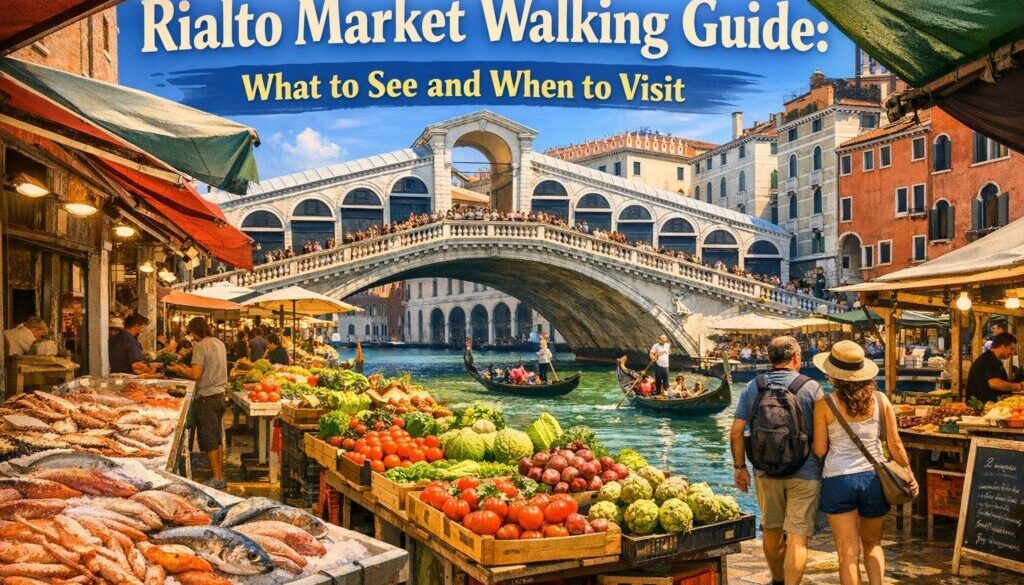
Rialto Market, often called Mercato di Rialto, is the historic market area near the Rialto Bridge. It is known for fresh produce, fish and seafood, and the practical side of Venice that sits just behind one of the city’s most recognisable landmarks. The market has a strong local identity, but it is also one of the easiest places for visitors to experience Venice as a living city rather than a museum.
Why it is one of Venice’s most famous market areas
Its location matters. Rialto has long been a trading hub, and the market area still carries that sense of commerce and movement. Even if you are not buying anything, standing there in the morning gives you a clearer picture of how central the area is to the city’s everyday life. For a useful overview of the surrounding neighbourhood and official visitor information, the Venice tourism portal at Venezia Unica is a good place to start.
What you will typically see there
Travel writers often describe Rialto Market in two parts: the food stalls and the atmosphere around them. Expect fresh produce, fish and seafood, and plenty of movement as locals and visitors pass through. Even when the market is modest in size, the setting gives it impact. Venice does not need a large footprint to feel memorable.
When is the best time to visit Rialto Market?
The best time to visit Rialto Market is usually early in the morning. That is when the area is most active, before the day settles into a slower rhythm and before some stalls begin to close. If you want the market to feel lively and local, this is the time to aim for.
Why early morning is usually best
In Venice, mornings are often the most rewarding part of the day for walking. The streets are cooler, the crowds are generally lighter, and market areas still have their working energy. Rialto Market is no exception. Arriving early means you are more likely to see the full scene rather than a market that is already winding down.
Why exact hours should be checked before you go
Exact opening hours can change by section and season, and the fish market can have different days or times from the produce market. That is why it is better to check current official information shortly before your visit rather than rely on a fixed timetable from a guidebook. For transport planning around the city, the official Venice public transport site ACTV / AVM Venezia is also worth checking.
Ready to Explore Venice?
Discover Venice at your own pace with a Walkables self-guided audio walking tour.
What to expect on the walk
Part of the appeal of Rialto Market is the walk into it. The approach takes you through central Venice, where bridges, narrow lanes and small shifts in direction make the city feel more intimate than it does on a map. The market itself is only one part of the experience.
Fish, produce and the market atmosphere
Visitors should expect a working market atmosphere rather than a polished tourist attraction. The setting is compact, and the appeal comes from the combination of movement, smell, sound and scale. In that sense, Rialto Market is a reminder that the best Venice experiences are often the ones you arrive at by foot, not by schedule.
Crowds, bridges and narrow lanes around Rialto
This area can become busy quickly, especially later in the morning and around major walking routes. The bridge crossings and adjacent lanes may feel crowded, so leave yourself extra time if you are trying to see the market before moving on to another part of the city. A little flexibility makes the experience much better.
How to get to Rialto Market
Rialto Market is in central Venice, so many travellers will reach it on foot from nearby districts. That is usually the most satisfying way to arrive because it lets you see the city’s changing street life and avoid overthinking the route.
Walking from nearby Venice districts
If you are already staying in or near the historic centre, walking is often the simplest choice. Venice is a city made for movement at ground level, and the route itself becomes part of the visit. If you are using maps on your phone, it can help to view the location on Google Maps before you set out so you have a general sense of the area, even if you still want to wander once you arrive.
Using the vaporetto
Travellers who prefer not to walk the whole way can use the vaporetto network to get closer to the Rialto area, then finish on foot. Because Venice transport can be busy and schedules may change, it is sensible to check the latest details with the local operator before leaving. That way you are not building your timing around outdated information.
Why route timing matters in central Venice
Even a short distance can take longer than expected in Venice because of bridges, lane changes and pedestrian flow. If Rialto Market is an important stop for your morning, do not leave it until the end of a tightly packed itinerary. Give it enough room to breathe.
💡 Walkables Travel Tip
In Venice, the best plan is often the one that leaves room for wandering. If Rialto Market is your first stop, build in a little extra time for getting lost in the good sense: following signs, crossing bridges and discovering the city as you walk.
For travellers who want more structured discovery without joining a group, Walkables also offers cruise companion guides and cruise port guides that help make time on shore feel more confident and rewarding.
Practical tips for Australian travellers
For Australian visitors, a few simple checks can make a Rialto Market visit smoother. Venice is easy to enjoy, but it rewards travellers who think ahead about money, connectivity and crowd awareness.
Cash vs card payments
Cards are widely used in Italy, but individual stalls and small vendors may prefer cash. It is better to carry a little cash rather than assume every purchase will be tap-and-go. If you are deciding how to manage travel money, you may also want to learn more about Wise; Walkables may receive a commission if you sign up through this link. Wise can be a helpful option for overseas spending, but always compare it with your own bank’s fees and conditions before you travel.
Staying aware of pickpockets and crowds
Rialto is a busy part of Venice, and the usual common-sense travel advice applies: keep bags close, avoid leaving valuables loosely accessible, and be particularly alert in crowded pedestrian spaces. That matters more around major attractions where people naturally slow down, stop and gather.
Checking entry rules, insurance and travel documents
Before travelling from Australia to Italy, check the latest official government advice so you know what applies to your trip at the time you go. Smartraveller’s Italy page at official government travel advice for Italy is the most reliable place to confirm entry requirements, safety updates and other current guidance.
Using an eSIM or roaming for maps and translation
Having mobile data can make Venice easier, especially for navigation, vaporetto information and translation apps. If you plan to use a travel eSIM, make sure your phone is unlocked and eSIM-capable before you buy anything. Apple’s support page on eSIM setup is useful if you need a quick compatibility check.
Want to Discover More on Foot?
Explore Walkables self-guided audio experiences and discover destinations at your own pace.
Things to verify before you visit
There are a few details worth checking close to your travel date, because Venice is a city where timing matters. This is especially true if Rialto Market is a key stop in a one-day itinerary.
Market hours and fish-market days
Do not assume that every section of the market follows the same hours. The fish market in particular may operate differently from the produce stalls. Check current local listings or official Venice sources so you are not arriving after the main activity has already passed.
Flood conditions and seasonal access
Venice can be affected by acqua alta, or high water, at certain times of year. That does not automatically ruin a visit, but it can affect the walking experience and may change how comfortable certain routes feel. If conditions are forecast, allow extra flexibility and avoid tight time pressure.
Transport schedules and local closures
Vaporetto schedules, service changes and local access can all influence how you plan the morning. The same goes for any temporary closures or crowd-management measures near central Venice. A few minutes of checking can save a lot of frustration once you are on the move.
If you want to add more sightseeing after the market, it can help to browse tours and activities for ideas around Venice and the wider lagoon. Walkables may receive a commission if you book through this link. It is a useful way to compare experiences, even if you still prefer to spend most of your time exploring independently.
Why Rialto Market fits a self-guided walking experience
Rialto Market is one of those places that improves when you are not being rushed through it. A self-guided approach lets you arrive at the right time, stay as long as the atmosphere holds your interest and continue walking whenever you are ready. That flexibility matters in Venice, where the best experiences often come from following the city’s pace rather than forcing your own.
Audio guidance can also add context without turning the morning into a lecture. When you understand why the market sits where it does, how the Rialto area developed and how to move onward through the city, the walk becomes richer. It is less about ticking off a market stop and more about understanding the neighbourhood around it.
For travellers who enjoy combining independence with local insight, this is exactly the sort of setting where a walking-first approach shines. You can stop when something catches your eye, follow a side lane for a few minutes, and then return to your route without losing the thread of the day.
That is also why Rialto Market works so well as part of a broader Venice day on foot: it gives you a focal point, but it also opens the door to unhurried exploration beyond the obvious landmark.
Final thoughts
Rialto Market is best treated as a morning experience: arrive early, keep your plans flexible and let the surrounding streets shape the visit as much as the market itself. If you go with that mindset, you will see a more authentic side of Venice and avoid the common mistake of arriving when the energy has already started to fade. For travellers who like to explore at their own pace, it is one of the city’s most rewarding walking stops.
Before you go, check current market timings, transport information and any seasonal conditions that could affect your route. Then give yourself enough time to enjoy the market, the bridge and the walk around it. In Venice, that slower pace is often the point.