
Venice is easy to explore on foot in the sense that walking is the natural way to see it. But if you are asking whether Venice easy to explore on foot for a first-time visitor, the honest answer is: yes, but not always effortlessly. The historic centre is pedestrian-only, yet the city’s bridges, narrow lanes, frequent turns and crowded routes can make simple journeys feel more complex than they look on a map.
That is why Venice rewards travellers who plan a little. A good map, some patience, and an understanding of when to walk and when to use the vaporetto can make the city feel far more manageable. For Australian travellers especially, reliable mobile data can be the difference between wandering calmly and feeling completely disoriented.
Quick Answer
Venice is highly walkable, but it is not the easiest city to navigate on foot. First-time visitors should expect bridges, stairs, crowds and occasional detours. Walking is essential, but a mix of walking, vaporetto and live navigation usually works best.
Is Venice easy to explore on foot?
For most visitors, Venice easy to explore on foot is a fair description of the city’s appeal. There are no cars in the historic core, and many of the most memorable places are best reached by simply walking from one canal crossing to the next. That is part of what makes Venice feel special: it is a city designed for pedestrians rather than traffic.
At the same time, “walkable” does not mean straightforward. Venice’s layout is famously irregular, and the shortest route on a map is not always the most obvious one on the ground. You may cross a bridge, turn a corner and find yourself in a dead-end alley, or discover that your route has been rerouted around a canal. For first-time visitors, this can be charming at one moment and frustrating the next.
If you want a useful official starting point for planning transport and movement around the city, the official Venezia Unica visitor portal is worth checking before you go.
Why Venice is one of the world’s most walkable cities
Venice works beautifully on foot because so much of the city’s atmosphere is tied to slow movement. Walking lets you notice the details that are easy to miss from a boat or from a rushed itinerary: quiet campi, shopfronts, small bridges, reflections in the water and the constant rhythm of local life.
It also gives you flexibility. If a square looks interesting, you can pause. If a side street catches your eye, you can follow it. That kind of spontaneous discovery is one of Venice’s greatest strengths, and it is exactly why a self-guided approach often suits the city so well. Walkables’ self-guided walking tours are designed for travellers who want that freedom without losing the thread of the place.
Why “walkable” does not always mean “easy”
The challenge in Venice is not distance so much as orientation. The city can feel smaller than it is because routes bend around water and buildings. A five-minute walk can become a 15-minute one if you take a wrong turn, stop for photos or need to backtrack over a bridge.
That does not make Venice difficult in a bad way. It simply means visitors should arrive expecting a city that asks for attention. If you are used to grid-style cities, Venice can feel disorienting at first. Once you accept that getting pleasantly lost is part of the experience, the city becomes much easier to enjoy.
What makes Venice tricky for first-time visitors?
First-time visitors often underestimate how much the city’s built environment shapes the walking experience. The most common surprises are not dramatic; they are practical.
Bridges, stairs and narrow streets
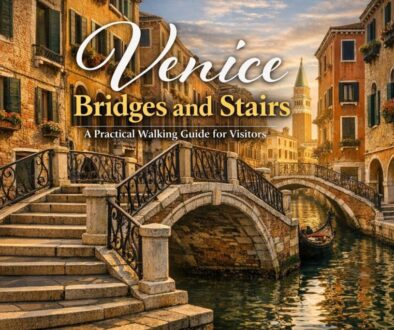
Bridges are everywhere in Venice, and many of them involve steps. That matters more than many travellers expect, particularly if you are carrying luggage, travelling with children or have limited mobility. Some routes that seem short on paper become tiring because of repeated climbs and descents.
The streets themselves can also be narrow, especially away from major tourist areas. In busy periods, movement slows down quickly. You may find yourself waiting for others to pass, pausing on bridges to let traffic clear, or following a stream of walkers rather than choosing your own pace.
Crowds and confusing routes
Venice is one of those cities where crowd flow can shape your experience as much as the sights themselves. Around major landmarks, route-finding becomes more difficult because people tend to follow the same paths. A journey that looks direct can feel crowded and indirect once you are in the middle of it.
That is one reason a walking-heavy day in Venice is best planned with flexibility. If you are trying to see too much in too little time, the city can feel like a puzzle. If you allow yourself to move slowly and accept a few detours, the same streets become much more enjoyable.
Why map navigation matters here
Navigation matters more in Venice than in many other European cities. A live map is useful not because the city is impossible, but because it helps you confirm direction at the moments when the street pattern becomes confusing. For most visitors, this is especially important when heading to a train station, ferry stop, hotel or timed reservation.
view the location on Google Maps whenever you are unsure where you are headed, but do not rely on the app alone to explain the city’s atmosphere. Venice is at its best when you use the map as support, not as the whole experience.
Ready to Explore Venice?
Discover Venice at your own pace with a Walkables self-guided audio walking tour.
When walking is enough — and when to use the vaporetto
The best way to think about Venice is not “walk or boat,” but “which combination works best today?” Walking is the main event, but the vaporetto can save time and energy when you are moving farther than a comfortable scenic stroll.
For official public transport information, routes and ticketing details, check ACTV’s transport site. Fares and rules can change, so it is worth confirming the latest details before your trip.
Best for short scenic connections
Walking is ideal for short hops between nearby sights, especially when the route itself is part of the pleasure. Venice is a city where the journey is often the attraction. If your accommodation, dinner booking or next stop is only a few bridges away, walking will usually be the most pleasant option.
When water transport saves time
Use the vaporetto when you need to cover a longer distance, cross to another part of the city or connect to the islands. It is also the sensible choice when you are tired, the weather is poor, or you simply want to preserve your energy for sightseeing rather than navigation.
Travellers who want to compare activities and additional experiences in Venice can also browse tours and activities. Walkables may receive a commission if you use this affiliate link.
Why some itineraries need both walking and boats
A practical Venice itinerary often mixes the two. You might walk through the historic centre in the morning, then take water transport in the afternoon to reach a different district or reduce return-time fatigue. This approach keeps the day enjoyable instead of exhausting.
That balance is especially useful if you want to see more than one area of the city in a limited amount of time. In Venice, the smartest itinerary is usually the one that protects your energy, not the one that insists on walking every kilometre.
💡 Walkables Travel Tip
If Venice is your first stop after a long flight, keep the first day light. Use the city’s walkability to your advantage, but give yourself time to orient, rest and enjoy short routes rather than trying to conquer the whole map at once.
What first-time visitors should know before they go
There are a few Venice-specific planning points that matter before you arrive. These are the details that can shape whether your walking experience feels smooth or unexpectedly complicated.
Venice visitor access rules may apply on selected days
Venice has introduced visitor access management on selected days to help manage tourism pressure. Because the policy has changed over time, first-time visitors should verify whether their travel date is affected and whether registration or exemptions apply. The most reliable place to check is the official city information through Comune di Venezia and the Venezia Unica portal.
⚠️ Important
Do not assume Venice access rules are the same year-round. Confirm the current system before you travel, especially if you are planning a day visit or a tightly timed stopover.
Accessibility limitations in historic areas
Venice’s historic fabric is part of what makes it beautiful, but it also creates access challenges. Bridges, stairs and uneven surfaces can make the city more demanding for travellers with mobility concerns, prams or heavy luggage. Some areas will be easier than others, and a route that looks manageable on a screen may feel more difficult in person.
If accessibility is important for your trip, it is wise to review official transport and city information before setting expectations. In Venice, a little advance planning goes a long way.
Why checking official transport and city info matters
Because Venice relies so heavily on water transport and pedestrian movement, the practical rules matter more than they do in many other cities. Timetables, access systems and route conditions can all affect how your day unfolds. First-time visitors should not treat Venice as a place where you can simply improvise every transfer.
Instead, build in time for orientation, keep a flexible plan, and check official sources before each major move. That approach makes walking feel much easier.
How mobile data can make Venice easier to explore
For many visitors, mobile data is one of the most useful tools in Venice. It helps with live maps, transport updates, restaurant bookings, translation and any last-minute changes to your plans. In a city where streets can be confusing, that matters.
Maps, transport and translation on the go
A working connection makes it easier to follow your position on a map, confirm a vaporetto stop and translate signs when needed. It also reduces the stress of asking for directions in a city where landmarks are sometimes hidden behind corners and canals.
That is why many travellers prefer a travel eSIM rather than depending entirely on roaming or public Wi‑Fi. For a walking-heavy city like Venice, connectivity is not a luxury; it is practical support.
Why an eSIM can be practical for Australians
For Australian travellers, an eSIM can be especially convenient because it allows you to land with data already available. That means you can open maps, check the route to your accommodation and find your way without hunting for a SIM counter first.
If you are comparing options for overseas spending and travel logistics, you may also want to learn more about Wise. Walkables may receive a commission if you sign up through this affiliate link.
Roaming vs travel eSIM vs local SIM
Roaming is the simplest option if you want to keep your Australian number active, but it is not always the most economical. A travel eSIM is often more practical for visitors whose main need is data. A local SIM can work too, though it may involve more setup and time on arrival.
The right choice depends on how much data you need and how often you plan to use navigation. For most first-time visitors walking around Venice, modest data is enough, but it is worth having it ready.
Is Venice a good city for a self-guided walking tour?
Yes — arguably this is one of the best cities in Europe for a self-paced experience. Venice rewards curiosity, and it is easy to miss the best moments if you are hurrying to keep up with a group. A self-guided format lets you stop, backtrack, linger and enjoy the route on your own terms.
That is where a self-guided audio approach fits naturally. It can provide context while still letting you move through the city at your own pace, which is particularly useful in Venice because the street pattern can be disorienting.
Travellers who prefer to move independently may also find Walkables’ cruise port guides helpful if Venice is part of a wider port-based itinerary.
Why self-paced exploration suits Venice
Venice is not a city to rush. The pleasure comes from small discoveries, quiet detours and the feeling that the city reveals itself gradually. A self-paced walk makes room for that. You are not trying to keep a group together, and you are not locked into someone else’s timetable.
For many travellers, that freedom is the difference between a good visit and a memorable one.
The benefits of audio-led context and navigation support
Audio guidance can help turn a confusing walk into a story you can follow. Instead of constantly checking a guidebook, you can listen while you walk, then decide whether to pause, continue or detour. That makes the experience feel more immersive and less mechanical.
If you enjoy exploring independently, a self-guided format can be one of the best ways to experience Venice. It suits a city that is best discovered slowly, on foot, with room to wander.
Want to Discover More on Foot?
Explore Walkables self-guided audio experiences and enjoy destinations at your own pace.
For broader trip planning, it can also help to check official travel advice before departure. Australian travellers should review Smartraveller’s Italy advice for entry requirements, safety updates and practical guidance.
Final verdict: should you explore Venice on foot?
Yes — absolutely. Venice easy to explore on foot is the right conclusion if you understand what that really means. The city is designed for walking, and that is the best way to experience it. But it is not a simple stroll-through-everything destination. Bridges, stairs, crowds and confusing routes mean first-time visitors do best when they combine walking with a little planning and, when needed, the vaporetto.
For the traveller who enjoys wandering, noticing details and moving at a human pace, Venice is a perfect city. Add reliable mobile data, check the official rules, and keep your itinerary flexible, and the city becomes far more enjoyable. In other words: yes, Venice is highly walkable — just not a place to wing entirely without preparation.
If you want to explore Venice with more confidence, walking at your own pace is still the best way in. The key is to treat the city as a place to experience, not simply a place to cross.