
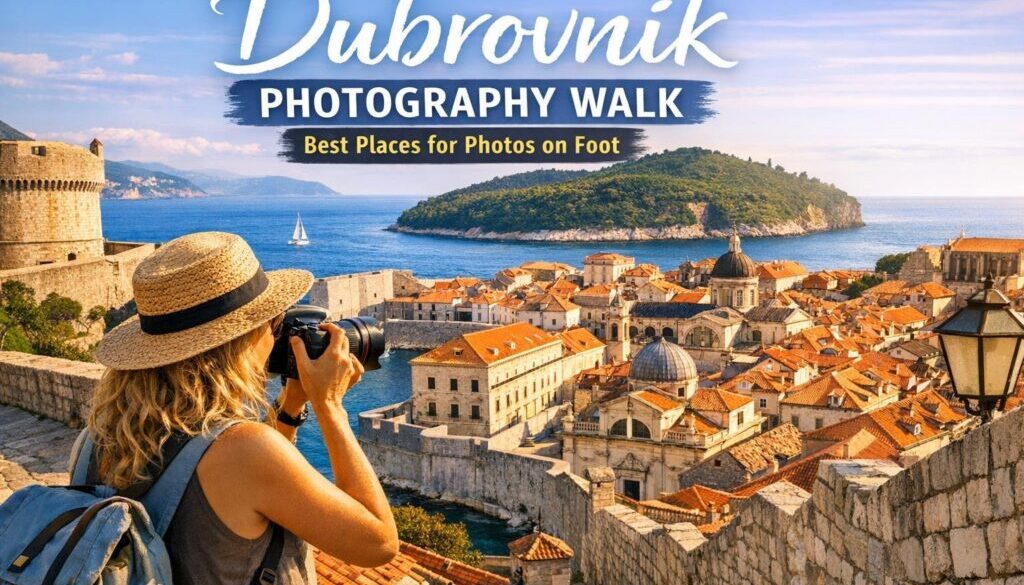
Dubrovnik is one of the most photogenic cities in Europe to explore on foot. A Dubrovnik photography walk gives you the city’s best angles in a single day: limestone streets, compact Old Town lanes, rooftop views, the Adriatic, and elevated city walls that look out over it all. The trick is knowing where to stop, when to go, and how to move through the Old Town so you spend more time composing photos and less time fighting crowds.
For travellers who like to wander slowly and notice the details, Dubrovnik rewards patience. The most satisfying photos here often come from a mix of street-level scenes and higher viewpoints, with early starts and a flexible route. If you want to experience it with more context, a self-guided experience such as self-guided walking tours can be a natural fit for a city like this.
Quick Answer
The best Dubrovnik photography walk usually starts early around Pile Gate, moves through Stradun and the Old Town’s lanes, then works toward the city walls, the Old Port, and one or two sea-facing viewpoints. For softer light and fewer people, morning is the best time; late afternoon and blue hour are also excellent if you want warmer tones and dramatic sea views.
null
Why Dubrovnik is so good for photography on foot
The appeal of a Dubrovnik photography walk is simple: the city is compact, layered, and full of visual contrasts. UNESCO recognises the Old City of Dubrovnik for its historic value, and you can feel that as you move from the main street into narrow side passages and then up onto the walls. The city changes character every few minutes on foot.
That variety matters for photography. On one walk, you can shoot broad urban scenes, intimate details like worn stone steps and shutters, and wide views over the Adriatic. The old stone surfaces also catch light beautifully, especially in the softer hours of the day. For the city’s heritage background, UNESCO’s listing is a helpful reference point: UNESCO’s Old City of Dubrovnik page.
Dubrovnik is also compact enough that you can build a route around what the light is doing. Street-level photos work well early in the morning, while elevated viewpoints often look best when the sun is lower and the sea has more texture. If you want a broader look at things to do in the area, you can also browse tours and activities to compare other options. Walkables may receive a commission if you use the affiliate link.
Best time to do a Dubrovnik photography walk
Why morning works best
Morning is usually the best time for a Dubrovnik photography walk. The streets are calmer, the stone surfaces are less harsh in the light, and the Old Town has a more relaxed atmosphere before the day fills up. It is the best window for clean frames of Pile Gate, Stradun, and the smaller lanes that feed off the main street.
Morning also helps if you want photos without large groups in the frame. Dubrovnik can become busy quickly, especially in peak season, so a head start gives you more room to work. A simple rule helps: arrive early, move slowly, and revisit key angles later only if the light improves.
Why late afternoon and blue hour are also worth it
If you prefer warmer tones, later in the day can be excellent. Late afternoon softens the walls and roofs, and blue hour can add mood to harbour and sea views. A Dubrovnik photography walk does not need to be a single straight route; it often works better as two shorter sessions, one in the morning and another near sunset.
Season and crowd considerations
Shoulder seasons are generally easier than the busiest summer weeks, especially if you want space to stop and frame shots without constantly moving aside. In summer, plan around the hottest part of the day and be realistic about crowd levels. Dubrovnik’s tourism board is a useful place to check current destination information before you go: Dubrovnik Tourist Board.
Ready to Explore Dubrovnik?
Discover Dubrovnik at your own pace with a Walkables self-guided audio walking tour.
Best places for photos on foot in Dubrovnik
Pile Gate and the Old Town entrance
Pile Gate is one of the smartest places to begin a Dubrovnik photography walk. It gives you the classic arrival shot into the Old Town and a natural starting point for wide frames of the city’s stone entrance, walls, and incoming foot traffic. It is especially useful early in the day, before the area becomes too busy.
Stradun for wide street scenes
Stradun, the main street through the Old Town, is ideal for symmetrical views and clean perspective shots. It is not the place for intimate solitude, but it is one of the strongest locations for understanding Dubrovnik as a living city rather than a set-piece. Stand back, wait for a clear gap, and use the street’s long lines to pull the viewer into the frame.
Jesuit Stairs and the St. Ignatius area
The Jesuit Stairs are a good stop if you want a recognisable Dubrovnik image with a sense of movement. The surrounding area around St. Ignatius also works well for architectural details and layered compositions. These are places where a slower pace pays off; the best image is often the one that comes from stepping aside and waiting for the light to land properly on the stone.
Rector’s Palace and Cathedral surroundings
The area around Rector’s Palace and the Cathedral is useful for travellers who enjoy a mix of grand facades and smaller nearby details. It is not just about the main façade; look for side angles, textured walls, doorways, and the way people move through the space. That is often where a Dubrovnik photography walk becomes more than a checklist.
Old Port for reflections and atmosphere
The Old Port is one of the best places to slow down and shoot atmosphere. Boats, masts, reflections, and stone edges create layers that feel different from the broader street scenes. If the water is calm, this can be one of the easiest places to create balanced compositions with the Old Town behind you.
City Walls viewpoints
The city walls are the major elevated photo stop and one of the defining experiences of any Dubrovnik photography walk. From the walls, you get the rooftops, the sea, and the city’s defensive geometry in one sweep. The views toward Fort Lovrijenac are especially memorable, and the height gives you the cleanest sense of Dubrovnik’s layout.
For current visitor information, it is best to check the official destination and attraction pages before you go, especially in peak season when conditions can change. If you are planning multiple sights, you may also find Walkables’ cruise port guides helpful if your trip includes a port day. That is particularly useful if you are arriving with limited time and want an efficient on-foot plan.
Buža Bars and cliffside views
Buža Bars are best thought of as a view rather than just a place to stop for a drink. When accessible, the cliffside setting gives you a different relationship with the city: the walls above, the sea below, and a more open sense of horizon. For photos, this is where Dubrovnik starts to feel less like a street network and more like a dramatic coastal composition.
Banje Beach for Old Town and sea compositions
Banje Beach is a valuable stop if you want the classic Old Town-and-sea image. It gives you distance from the walls, which helps when you want a fuller city profile rather than detail work. If you are shooting near sunset, the contrast between the stone city and the water can be especially appealing.
Ploče Gate and eastern Old Town angles
Ploče Gate and the eastern side of the Old Town are good for travellers who like a slightly different angle on Dubrovnik’s historic core. This side can feel less expected than the main entrance, and it is often a useful addition if you want to avoid repeating the most common shots.
Lovrijenac Fortress vicinity
The area around Lovrijenac Fortress works well if you want an exterior shot that emphasises the city’s defensive position. Even if you are not going inside, the surrounding viewpoints help you capture Dubrovnik’s relationship to the sea and its fortified setting. It is one of the clearest reminders that the city was built to be seen as well as defended.
Mount Srđ as an optional add-on
If you want a wider panorama after your walking route, Mount Srđ is the obvious add-on. The Dubrovnik Cable Car can take you up for a broader city view, subject to seasonal operations and weather. The official site is the right place to check before planning that part of the day: Dubrovnik Cable Car.
If you like to pair a city walk with a higher viewpoint, the cable car can extend your photo day without complicating the route. It is not essential to the core walking itinerary, but it is a strong extra option if you want one wide cityscape in addition to your street photography.
How to plan the route for the best light and fewer crowds
The most effective Dubrovnik photography walk is not about racing between spots. It works best when you group locations by light and movement. Start at Pile Gate, move into Stradun while it is quiet, pause for side streets and architecture, then continue toward the Old Port and the eastern side of the Old Town. If you have time and energy left, add the walls or a later viewpoint.
That approach does two things. First, it keeps your walking logical and avoids unnecessary backtracking. Second, it gives you a better mix of shots: wide, medium, and detail images rather than a string of nearly identical frames. For travellers who prefer to explore on foot with context and pacing, this is exactly where a self-guided format can shine.
It is also wise to be flexible if cruise traffic is heavier than expected. Dubrovnik can feel very different depending on the time of day, so if a viewpoint is busy, shift to a quieter lane or return later. A little patience usually pays off.
💡 Walkables Travel Tip
For the cleanest photos, build your route around two passes: one early morning for the Old Town streets, and one later for the walls or sea views. That way, you avoid forcing every shot into the same light conditions.
Practical tips for photographing Dubrovnik on foot
Wear comfortable shoes
This may sound obvious, but it matters more in Dubrovnik than in many flat city destinations. The Old Town streets are stone, uneven in places, and often steeper than they first appear. A Dubrovnik photography walk can turn tiring quickly if you are wearing the wrong shoes.
Carry the basics, not too much
A phone or camera, a small power bank, and a little extra storage are usually enough for most walkers. If you are using a phone for both navigation and photos, battery drain becomes real over the course of the day. Lightweight gear helps you stay mobile and less distracted.
Download maps before you go
Offline maps are worth having because navigation is easier when you are not constantly worrying about signal or battery. For location planning, it also helps to view the location on Google Maps before you set off so you can build a route that makes sense on foot.
Check connectivity before relying on it
If you are travelling from Australia, an eSIM or roaming add-on can make life simpler, especially if you want maps, messaging, and uploads working without hassle. If you are comparing travel money and connected services for the trip, you may also want to learn more about Wise for overseas spending. Walkables may receive a commission if you use the affiliate link.
Be considerate with tripods and crowd space
Dubrovnik’s historic streets are not the place for blocking foot traffic. Keep your setup compact, and if you use a tripod, do so carefully and only where you will not slow others down. In busy sections, a mobile-first approach is often the best one.
If you want to compare more experiences after your photo walk, it can be useful to explore cruise companion guides if your visit is part of a cruise itinerary. That is a practical way to shape a short stay into something more considered.
What to know before you go
For Australian travellers, the main pre-trip check is entry advice. Smartraveller is the most reliable source for current Croatia guidance, including any updates that matter before departure: Smartraveller’s Croatia travel advice. Because travel conditions can change, it is worth checking again shortly before you fly.
Money is straightforward in Croatia because the euro is used, but it is still sensible to carry a backup card and a small amount of cash for smaller purchases. If you are planning your broader trip, official destination information from the Croatia National Tourist Board can help with context beyond Dubrovnik itself.
Weather, opening times, and access conditions can all affect a walking photography day. The city walls and the cable car are especially worth verifying on the day, since seasonal operations and weather can affect how your route unfolds. That flexibility is part of the appeal: a good Dubrovnik photography walk adapts to the city rather than trying to force the city into a fixed schedule.
Want to Discover More on Foot?
Explore Walkables self-guided audio experiences and discover destinations at your own pace.
Make the most of Dubrovnik at your own pace
The best photography days in Dubrovnik are rarely the fastest ones. They are the days when you start early, keep moving, pause for detail, and let the city reveal itself in layers. A Dubrovnik photography walk gives you that structure without taking away the freedom to stop when a corner, stairway, or light shift suddenly looks right.
That is why Dubrovnik suits independent travellers so well. You can build a route around your own eye, your own pace, and the kind of images you want to take home. If you want the city to feel less like a series of sights and more like a walk with a story, the self-guided approach is the one that tends to work best.
And if you use the right timing, stay flexible, and keep your route compact, Dubrovnik rewards you with photographs that feel both iconic and personal — exactly what a good travel walk should do.