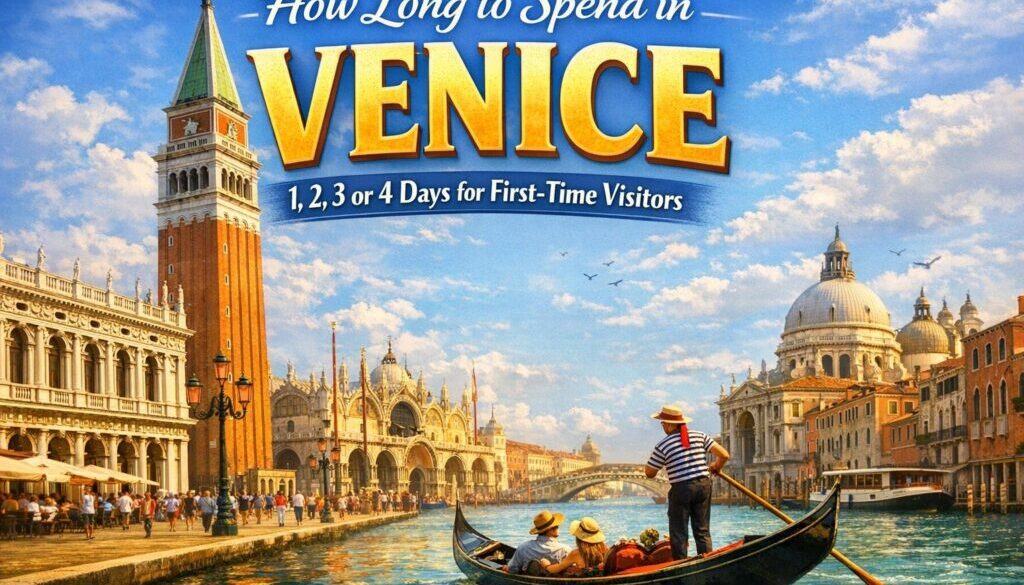
For most first-time visitors, how long to spend in Venice comes down to a simple answer: two to three full days is the sweet spot. One day can work for a highlights-only visit, but Venice rewards travellers who stay overnight, move slowly and leave room for getting a little lost.
That matters even more now that Venice’s access-fee system has made short visits more complicated. If you are weighing up a day trip, an overnight stop or a longer stay, the right choice is not just about how much you want to see. It is also about how Venice actually works: on foot, by vaporetto, and at a pace that is slower than most cities in Italy.
null
Quick Answer
For a first visit, plan on 2 to 3 days in Venice if you want to see the main sights without feeling rushed. One day is possible for a quick taste, while 4 or more days suits slower travellers who want islands, neighbourhood wandering and a less crowded rhythm.
How long should you spend in Venice?
If you are visiting Venice for the first time, aim for at least two nights if your schedule allows. That gives you time for the obvious highlights around St Mark’s Square and the Rialto area, plus some time to wander side streets, cross bridges without watching the clock, and enjoy Venice after the day visitors leave.
Venice looks compact on a map, but it often takes longer to explore than expected. A route that seems short can turn into a series of bridges, narrow lanes and vaporetto rides. In other words, the city does not lend itself to rushed sightseeing.
For official visitor and access information, it is worth checking the city’s tourism portals and the access-fee site before you travel: Venice’s official access-fee portal and Venezia Unica.
Is 1 day enough in Venice?
Yes, one day can give you a memorable first impression of Venice. No, it is not enough to see the city properly.
A single day is best treated as a highlights visit. You can focus on the core sights, take in the atmosphere of the canals, and perhaps squeeze in one neighbourhood or one major church or museum. But once you factor in arrival time, luggage, walking, ticket queues and water transport, the day disappears quickly.
What you can realistically see in a day
In one day, most travellers should keep expectations tight. Choose a small number of priorities rather than trying to cover the whole city. The best approach is to focus on the areas closest together and allow time for wandering between them.
A one-day visit is most useful if you already know Venice may not be your only stop in Italy, or if you are arriving as part of a cruise, train connection or stopover. If that is your situation, it can still be worth doing well rather than trying to do too much.
Who a one-day visit suits best
One day suits cruise passengers, travellers with a tight itinerary, and people who simply want to say they have seen Venice. It is also the right choice if you prefer to spend longer in other Italian cities such as Florence or Rome, and only want a brief taste of Venice.
Why the day-tripper access fee matters
Venice has introduced an access-fee system for certain peak dates, which is especially relevant for day visitors. If you are planning a short visit, check the official portal before booking. The rules can affect whether a quick visit feels simple or cumbersome, and they are one of the main reasons an overnight stay can be more practical.
For official Australia-based travel advice on Italy, including entry and safety guidance, check Smartraveller’s Italy page.
Is 2 days in Venice enough?
Two days is enough for a first visit if you plan well. It gives you room for the headline sights, an evening in the city after day visitors leave, and a slower second day that does not feel like a race from one landmark to the next.
This is where Venice starts to feel more satisfying. You can balance “seeing” Venice with actually experiencing it.
The pros of a 2-day stay
With two days, you can spread out the big sights instead of stacking them into one exhausting itinerary. You are also more likely to enjoy the quieter side of the city: early mornings, late afternoons and the spaces between the landmarks.
For many first-time visitors, that balance matters more than ticking off every possible attraction. Two days is often enough to avoid the classic mistake of treating Venice like a place to sprint through.
Ready to Explore Venice?
Discover Venice at your own pace with a Walkables self-guided audio walking tour.
What you may still need to skip
Even with two days, you may need to make choices. Some travellers will prefer to spend more time in the historic centre, while others will want to add a short island trip. You will probably not do everything, and that is fine. Venice is better when you leave something for next time.
Best for first-time visitors on a tight schedule
If Venice is one stop in a broader Italy itinerary, two days is the minimum I would recommend for most first-time visitors. It is enough to understand the city’s pace, enjoy a proper evening and avoid feeling as though you only skimmed the surface.
Is 3 days the ideal amount of time?
For many first-time visitors, yes. Three days is often the best answer to how long to spend in Venice because it gives you a sensible mix of structure and freedom. You can see the main sights, wander without pressure, and still have time to visit at least one island or neighbourhood beyond the obvious centre.
Why 3 days is often the sweet spot
Three days works because Venice is not just a collection of landmarks. It is also a city of transitions: bridges, corners, small squares, ferry rides and unexpected detours. A three-day stay lets you absorb those moments rather than trying to rush through them.
It is also the point where a traveller can begin to notice the rhythm of the city instead of only its headline attractions. That is the real difference between a short stop and a proper visit.
A better balance of sights, wandering and atmosphere
With three days, you can divide your time naturally. One day for the classic highlights, one for wandering through quieter areas, and one for islands or cultural visits. That structure is flexible enough for independent travellers and still relaxed enough to feel like a holiday.
If you like exploring on foot, a self-guided format works particularly well in Venice. The city’s layout rewards travellers who are happy to pause, look around and follow their curiosity. If you enjoy that style of travel, self-guided walking tours can add context without locking you into a group schedule.
When 3 days still feels too short
Three days can still feel tight if you want to visit several museums, spend long lunches, or include the lagoon islands without rushing. If you travel slowly, love photography, or simply want space to breathe, four days may suit you better.
💡 Walkables Travel Tip
Venice rewards travellers who build in unplanned time. Leave at least one part of the day flexible so you can pause for a quiet campo, detour across a bridge, or simply enjoy the city without checking your next reservation.
Should you spend 4 days or more in Venice?
Four or more days makes sense if you like slow travel, if you are combining Venice with island excursions, or if you simply want a gentler trip. Venice is small in scale, but it is rich in detail, and that detail is easier to appreciate when you are not compressing everything into a short stay.
Slow travel, food and photography
A longer stay is ideal for travellers who enjoy repeating the same area at different times of day. Morning light, evening light and the quieter hours between them all give Venice a different feel. Food-focused travellers and photographers often benefit from the extra time because it allows for less rushed meals and better pacing.
Including Murano, Burano and Torcello
If you want to add the lagoon islands, extra time helps. Island visits are worthwhile, but they are not quick add-ons in the way a short metro hop might be in another city. They take planning, and the transit time itself is part of the day.
For travellers looking to add excursions beyond the city, it can also help to browse tours and activities. Walkables may receive a commission if you book through this link.
When extra time makes sense
Four days or more is the right call if Venice is the centrepiece of your trip rather than a stop between other destinations. It is also a smart choice if you want to avoid the pressure of a tightly scheduled itinerary and prefer to move around the city at a more natural pace.
How Venice’s access fee affects trip length
This is one of the most important practical issues for short-stay visitors. Venice’s access-fee system means a day trip is not always the simplest option, especially on dates when the fee applies. That alone can tip the balance in favour of staying overnight.
Day visitors vs overnight guests
Day visitors and overnight guests are not treated the same way. The official rules distinguish between those entering for the day and those staying in the city, so it is essential to verify the current requirements before you book. The official access portal is the safest place to check the details.
For many first-time visitors, this makes a short overnight stay easier than a day trip. You avoid some of the friction that comes with a same-day visit, and you also get Venice in the quieter parts of the day.
Why staying overnight can be simpler
An overnight stay reduces the sense of hurry. You do not have to leave the city before you have properly settled into it, and you can see it at its best: early morning, evening and after the day-trip rush.
That is one reason how long to spend in Venice is not only a question of attractions. It is also a question of logistics and comfort.
What to check before you book
Before locking in dates, check whether your visit falls on an access-fee day, whether you need to register, and whether your accommodation or travel plans affect the rules that apply to you. The official Venice access-fee portal is the best source for current information.
Want to Discover More on Foot?
Explore Walkables self-guided audio experiences and discover destinations at your own pace.
Tips for planning a first trip to Venice
Build in time for getting lost
Getting lost in Venice is not really a problem; it is part of the experience. The lanes are compact, the bridges can interrupt a direct route, and the city often reveals itself in small pieces. Leave room for that.
Use vaporetto and walking time realistically
Venice is walkable, but that does not mean it is quick to cross. Water transport is part of the rhythm of the city, and even a simple move from one area to another can take longer than expected. Plan your days with that in mind rather than stacking attractions too tightly together.
If your visit includes tours or extra experiences, you can also find things to do that suit a short stay or a more relaxed itinerary.
Book major sights in advance
For first-time visitors, advance planning makes a noticeable difference. Even if you like to travel spontaneously, it is wise to sort out the biggest practical pieces before you arrive so you can spend more time enjoying the city and less time figuring things out on the spot.
Consider a self-guided audio walk
Venice is particularly well suited to a self-guided audio format because the best way to appreciate it is often to move at walking pace. A good audio walk can help you understand what you are looking at without taking away the freedom to pause, detour or linger.
If you like to experience a destination independently, Walkables self-guided walking tours are designed for exactly that kind of traveller.
What to know before you go from Australia
Schengen entry basics
Australian travellers visiting Italy generally need to follow Schengen short-stay rules, so check your passport validity and the current entry conditions before departure. Do not assume the rules are unchanged from your last Europe trip.
Smartraveller checks
For Australian government advice on safety, entry and local travel conditions, the Italy page on Smartraveller should be part of your pre-trip planning.
Connectivity and eSIM considerations
Venice is one of those cities where reliable data is genuinely useful. Maps, vaporetto information, restaurant reservations and messaging all matter, and coverage is more helpful than in a typical holiday city because the transport system is more layered.
If you want a convenient travel-money option for the rest of your Italy trip, you can also learn more about Wise. Walkables may receive a commission if you sign up through this link.
For many travellers, the simplest approach is to make sure your phone is ready before you leave Australia, then keep an offline map backup just in case.
So, how long to spend in Venice?
If this is your first time, the best answer is usually two or three days. One day is enough for a snapshot, but it is not enough to appreciate the city properly. Four days or more suits slower travellers, island add-ons and people who want Venice to feel like a destination rather than a checklist item.
In practical terms, the best trip is the one that gives you enough time to arrive, settle in, wander, and enjoy the city without watching the clock. That is especially true in Venice, where the experience is as much about movement and atmosphere as it is about individual sights.
For travellers who want to see Venice on foot and understand it as they go, the city is at its best when you press play, start walking and let the neighbourhoods unfold at their own pace.
Before you go, it is also worth opening view the location on Google Maps to get a feel for the city’s layout and how the main areas connect.
Sources: official Venice access portal, Venezia Unica, Turismovenezia, and Smartraveller Italy travel advice.