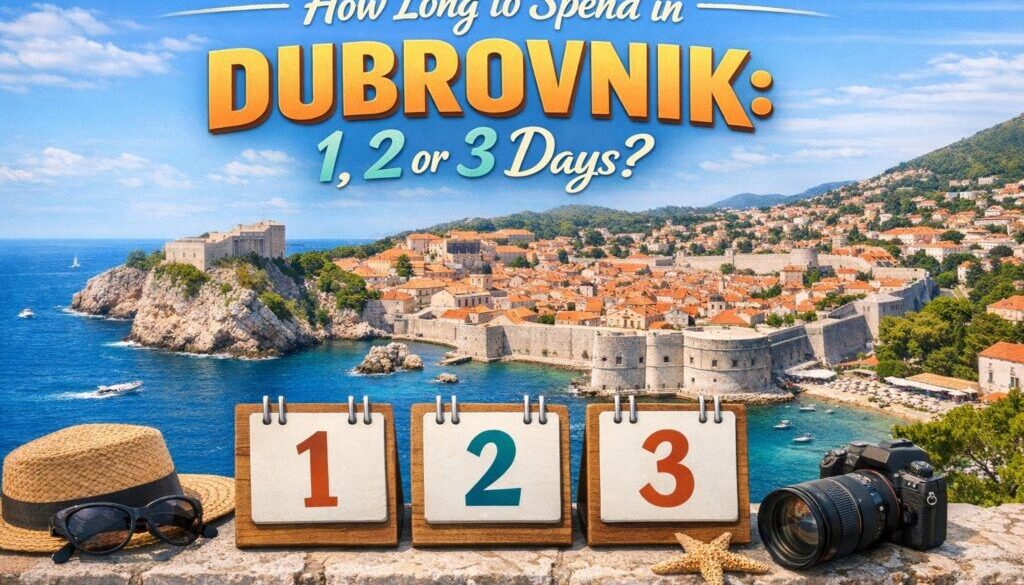
Dubrovnik is one of those places where the right answer depends less on the calendar and more on how you like to travel. If you only want the essential Old Town experience, how long to spend in Dubrovnik can be as little as one full day. If you want to walk it properly, linger over viewpoints, and avoid feeling rushed, two days is the sweet spot for most first-time visitors. Three days or more gives you room to slow down, add a beach stop, or take a side trip.
The city is compact and highly walkable, but Dubrovnik is not a flat stroll. The Old Town is made for exploring on foot, yet the stone streets, stairs and hills mean pace matters. That is why the question of how long to spend in Dubrovnik is really a question about how deeply you want to experience it.
Quick Answer
For most first-time travellers, two days is the best balance. One day covers the Old Town essentials, while three days works well if you want a slower pace, beaches, viewpoints or a day trip.
If you are planning your own walking-focused itinerary, it helps to think in scenes rather than a rushed checklist. Dubrovnik rewards travellers who slow down, observe the details and move at street level. That is exactly the kind of trip where self-guided walking tours can add context without taking away your freedom.
How long to spend in Dubrovnik
The short answer is simple: one day is enough for the highlights, two days is better for a fuller first visit, and three days or more suits travellers who want to explore beyond the obvious. The right choice depends on whether Dubrovnik is a stop on a bigger Europe trip, a cruise call, or the main event.
The city’s historic core is the main reason people come, and it is very possible to see a lot on foot. But the same compactness that makes Dubrovnik appealing also tempts travellers to overpack their days. A good rule is to plan less than you think you need, then enjoy what you can actually savour.
What changes the ideal length of stay?
A few things make a big difference to how long to spend in Dubrovnik. First is your pace: some travellers are happy covering the Old Town quickly, while others want to sit for a coffee, browse side streets and pause for the views. Second is the season. In warmer months, heat and crowds can make a shorter itinerary feel more intense. Third is mobility. Dubrovnik’s steps and uneven paving can make even a short distance feel more involved than it looks on a map.
It also matters whether you plan to visit the city walls, museums, viewpoints or nearby islands. The official Dubrovnik Pass is worth checking early in your planning because it can influence how you structure a one-day, two-day or longer stay. Walkables may receive a commission if you choose to book through some affiliate links on this page.
For a broader sense of the city’s layout and visitor priorities, the Dubrovnik Tourist Board is a useful official reference point.
Is Dubrovnik walkable?
Yes, Dubrovnik is walkable in the parts visitors care about most, especially the Old Town. In fact, walking is the best way to understand the city’s scale, architecture and atmosphere. But “walkable” in Dubrovnik does not mean easy in the same way as a flat European city centre. Expect stairs, inclines and uneven limestone paving.
That is part of the charm, but it also changes the way you plan your time. A short stay can still be rewarding, yet you will enjoy it more if you do not try to squeeze in too much between breakfast and dinner.
Why the Old Town is best explored on foot
The Old Town is compact enough that you can move between major sights without relying on transport. Stradun, the city walls, Rector’s Palace, Franciscan Monastery and the surrounding lanes all make more sense when experienced as part of a walk. You notice the shifts in the stone, the slope of the streets and the way the city opens to the sea.
This is also where a self-guided audio experience works beautifully. You can Press Play, follow the route, and still stop whenever something catches your eye.
What makes walking Dubrovnik different
Dubrovnik’s streets are narrow in places, busy at peak times and shaped by the terrain. That means your route matters more than in a grid-based city. It also means sensible footwear is not optional. Comfortable shoes will make a real difference if you plan to walk the walls, move between viewpoints or explore beyond the main street.
If you are the sort of traveller who prefers exploring at your own pace, Dubrovnik is especially rewarding. It is compact enough to cover, but layered enough to justify taking your time.
Who may need a slower pace
Anyone travelling with limited mobility, young children, heavy luggage or simply a preference for easy walking should build in more time. Heat can also change the rhythm of the day. What looks like a short walk on paper may feel longer once you add stairs, crowds and pauses for shade.
Ready to Explore Dubrovnik?
Discover Dubrovnik at your own pace with a Walkables self-guided audio walking tour.
What to see in one day in Dubrovnik
If you only have one day, focus on the Old Town and one major elevated experience. That gives you a proper taste of Dubrovnik without spending the whole day in transit or queues.
A sensible one-day plan usually starts in the Old Town, continues with the city walls or another major landmark, and leaves time for a late lunch, a drink or sunset somewhere with a view.
Old Town highlights
Start with the streets around Stradun, then move outward into the lanes and squares that make the centre feel alive. The beauty of Dubrovnik is that even a simple walk between landmarks feels meaningful when you have time to look up, slow down and notice the details.
City Walls and a viewpoint
The city walls are one of the biggest time commitments in a short visit, but they are also one of the most important. If you are deciding how long to spend in Dubrovnik and you want the classic first impression, the walls should be near the top of the list. They give you the city from above and show why Dubrovnik feels so distinctive.
For an easy next step after planning your route, you can view the location on Google Maps and map out where the Old Town, walls and nearby points of interest sit relative to your accommodation.
When a one-day visit makes sense
One day makes sense if Dubrovnik is a cruise stop, a brief stopover within a wider Croatia itinerary, or part of a tightly scheduled Europe trip. It is enough for the essentials, but not enough to relax deeply into the city. If that is your situation, keep the plan tight and prioritise the Old Town over trying to “do” the whole city.
For visitors arriving by ship, cruise companion guides can be a practical way to make limited shore time feel better structured and less rushed.
Why two days is the sweet spot for most visitors
If you are wondering how long to spend in Dubrovnik for a first proper visit, two days is usually the best answer. It gives you enough time to see the core sights, walk at a more natural pace and enjoy the city after the busiest midday hours.
Two days also gives Dubrovnik room to breathe. You can see the walls one day and return to the Old Town lanes without feeling as though you are simply moving from one photo stop to the next.
More time for the main sights
With two days, you can split the city into a morning and an afternoon, or into an Old Town day and a walls-and-viewpoints day. That approach works particularly well if you want to understand the city rather than just pass through it.
It also leaves room for the unexpected. Some of the best moments in Dubrovnik come from slower walking: a side lane, a quieter square, or a viewpoint you did not plan for.
A better pace for dining and sunset strolls
Two days lets you enjoy Dubrovnik outside the main sightseeing window. Early mornings and later afternoons are often the most pleasant times to walk. You are less likely to feel rushed, and the city often feels more atmospheric when the day-tour crowd has eased.
If you are comparing the best length of stay for style as much as logistics, two days gives you a more premium experience. You can keep the day moving, but still stop for a long lunch or an unhurried evening walk.
💡 Walkables Travel Tip
Plan your walking day around cooler hours if you can. Dubrovnik’s stone streets and climbs are much easier to enjoy when you are not pushing through the hottest part of the day.
Best for first-time Australian travellers
For Australian travellers heading to Croatia for the first time, two days is a sensible balance between making the most of the journey and avoiding overcommitment. It works well if Dubrovnik is one stop on a longer Europe trip and you want one destination to feel properly explored rather than simply checked off.
Because Croatia is in the Schengen Area for short-stay travel purposes, broader itinerary planning matters too. Before you travel, check current advice on Smartraveller’s Croatia page and the European Commission’s Schengen information if Dubrovnik is part of a wider European trip.
When to stay three days or more
Three days or more is the right call if you want Dubrovnik to feel relaxed rather than efficient. This is the best option for travellers who like to wander, spend time at the water, or use the city as a base for a slower Croatia itinerary.
It is also the better choice in peak season, when crowds, heat and queues can make a short stay feel compressed.
Beaches, viewpoints and island time
Extra time opens up the possibility of adding beaches, cable-car viewpoints, boat trips or a nearby island visit. Even if you do not want a packed list, having an extra day makes the city feel more generous. You can take your time in the Old Town and still leave space for something different.
The official tourism materials and Dubrovnik Pass information are useful when you start comparing which attractions fit together logically in a longer stay. The main point is not to chase quantity; it is to create a pace that feels comfortable.
Why extra time helps in peak season
In the busiest months, short stays can turn into a sequence of queues, heat and quick decisions. A longer stay gives you flexibility. You can see the same place early one morning and again in the evening, when the atmosphere is completely different.
If you travel with reliable mobile data, it is easier to adjust on the fly. For visitors who want maps, booking confirmations and opening hours available while walking, a travel eSIM can be useful. If you are comparing plans, consider the practical details first and learn more about Wise for managing travel spending across currencies; Walkables may receive a commission if you use some affiliate links.
Slower travel feels more rewarding here
Dubrovnik is the kind of city that rewards repetition. Once you have seen the headline sights, a second or third day lets you experience the place more like a resident and less like a visitor passing through. That can be especially appealing if you prefer a walking holiday over a packed sightseeing sprint.
Want to Discover More on Foot?
Explore Walkables self-guided audio experiences and discover destinations at your own pace.
How to plan a walking-focused Dubrovnik trip
Once you have decided how long to spend in Dubrovnik, the next step is planning for the way the city actually works. That means thinking about shoes, heat, access and connectivity as much as attractions.
Comfortable shoes and steep streets
This is one of the most practical pieces of advice for Dubrovnik. The Old Town is beautiful, but stone paving, steps and inclines can become tiring faster than expected. If you want to walk for several hours, choose footwear that handles uneven surfaces comfortably.
Using the Dubrovnik Pass
The official Dubrovnik Pass is worth checking because it can simplify a short stay. If your itinerary focuses on the major sights, it may help you decide what to prioritise first. The official pass site is the best place to confirm current inclusions and validity options before you go.
Staying connected while you walk
Reliable mobile data makes self-guided travel much easier. You can check routes, open maps, look up attractions and book last-minute tickets or dinners without hunting for Wi-Fi. For Australian travellers, a compatible eSIM can be a practical choice, especially if Dubrovnik is part of a longer Europe trip.
That convenience is particularly useful in a city with many turns, stairs and small streets. If you are navigating independently, the combination of maps and audio guidance can make walking feel calmer and more confident.
Practical tips for Australian travellers
Dubrovnik is easy to enjoy, but it is worth planning with a few broader travel details in mind. These are not the most glamorous parts of the trip, but they can make your stay smoother.
Schengen short-stay rules
Australian passport holders generally fall under Schengen short-stay rules when visiting Croatia. If Dubrovnik is part of a bigger European itinerary, be sure you understand how your days across Schengen countries fit together. The current official advice is best checked close to travel, rather than relying on older assumptions.
Currency and payments
Croatia uses the euro, so budgeting is straightforward once you factor in your broader European spending. Card payment is common, but it is still sensible to keep some flexibility for smaller purchases and local variation.
Safety and current travel advice
For the latest Australian government advice, Smartraveller’s Croatia page is the right place to start. It is the most reliable source for current safety and entry information before you travel.
If you want to compare additional walking-friendly experiences after you have chosen your stay length, you can also browse tours and activities through the approved affiliate link. Walkables may receive a commission if you book through it.
Final recommendation: how long should you stay?
If you still want the simplest answer to how long to spend in Dubrovnik, here it is: one day is enough for the essential Old Town experience, two days is ideal for most first-time visitors, and three days or more is best if you want to slow down and explore beyond the obvious.
Best for one day
Choose one day if Dubrovnik is a cruise stop or part of a packed itinerary and you mainly want the Old Town, the city walls and a memorable first look at the city.
Best for two days
Choose two days if you want the best overall balance. This is the most practical option for travellers who want to walk comfortably, see the highlights and still enjoy the city at a relaxed pace.
Best for three days or more
Choose three days or more if you want beaches, viewpoints, side trips or a slower style of travel. That is where Dubrovnik shifts from a highlight stop to a place you can really settle into.
However long you stay, Dubrovnik is best experienced on foot. Walk it slowly, look up often, and leave room for the parts of the city that are not in the guidebook. That is usually where the trip becomes memorable.